
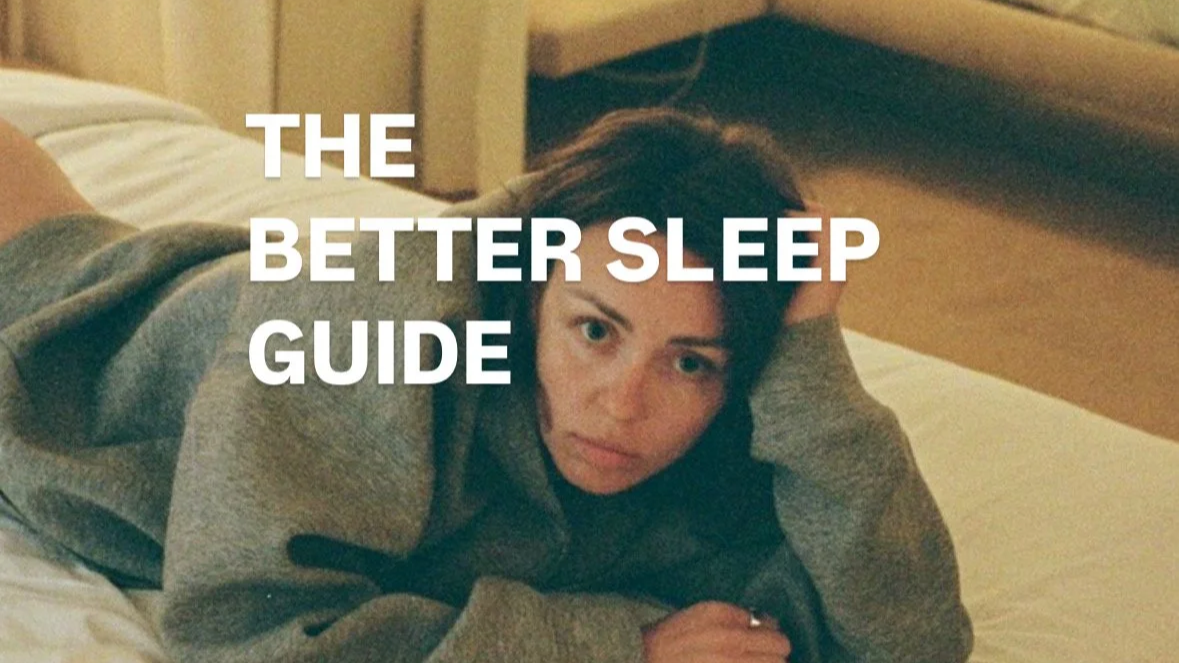
Hi, I’m Marie.
I’m a health coach, personal trainer and mental coach in Vienna and co-founder of BOW. I work with women and men on their health, body and mind together. And sleep comes up with almost everyone, sooner or later.
I’ve never been a good sleeper. Ever since I was a kid, I take my problems to bed with me. Whatever didn’t get solved during the day, my head picks up at 3am and starts working on it.
So I’ve put a lot of time, money and trial and error into sleep.
This is what actually stuck. Five things in the evening, two in bed, three in the morning.
Why you wake up at night
Waking up once or twice is normal. Everyone surfaces briefly between sleep cycles. The problem is when you surface and your system is already switched on, heart a bit fast, head already running through tomorrow.
Three things usually sit behind that. Your body clock doesn’t get a clear signal of when day ends and night begins. Your stress system is still running hot from the day. And sometimes it’s simply physical: too warm, too much liquid, blood sugar dipping.
Everything in this guide works on one of those three. You don’t need all ten. Pick two, do them for two weeks, then add more.
Evening
1. Peppermint tea
What it does: Honestly, the tea itself is less about sleep chemistry and more about the ritual. Something warm, no caffeine, same time every evening. Your nervous system learns that this cup means the day is over. Peppermint also settles digestion, which helps if a heavy dinner keeps you restless.
How I do it: One cup, early in the evening. Keep it small. A big cup right before bed is a classic reason for waking up at 3am to pee.
2. Dim your lights 2 hours before bed
What it does: Light is the strongest signal your body clock gets. Bright overhead light in the evening tells your brain it’s still day and pushes back melatonin, the hormone that makes you sleepy. Dim, warm light lets it rise on time.
How I do it: Big ceiling lights off. Small lamps only, warm bulbs, ideally low and below eye level. It also just feels calmer, which is half the point.
3. Blue light blocking glasses
What it does: Screens and LEDs are heavy in blue light, the part that hits your body clock hardest. Glasses filter it out. The research here is mixed, so treat them as a helper and keep step 2 as your main lever.
How I do it: I wear them once the lamps are on and I’m still on my phone or laptop. If you buy a pair, go for amber or orange lenses. The clear “blue light” lenses filter very little.
4. Magnesium flake foot bath
What it does: People usually sell this as magnesium soaking in through the skin. That part is weakly studied. What’s well supported is the warmth: warm feet open up the blood vessels in your hands and feet, your body releases heat, and your core temperature drops. That drop is one of the signals your body uses to fall asleep.
How I do it: A bowl of warm water, a handful of magnesium chloride flakes, feet in, phone away. I do it about an hour before bed. It’s also the one step where I actually sit still.
5. A nerve calming supplement stack
What it does: Supports the switch from “on” to “off” when stress is the thing keeping you up.
Full details and who should skip it are in the supplements section below. Please read that part before buying anything.
In bed
6. Sleep mask
What it does: Even a little light through your eyelids can make your sleep lighter. Streetlights, early summer sunrise, the standby light on the TV. A mask gives you full darkness without blackout curtains, and it works in hotels too.
How I do it: A soft one that doesn’t press on my eyes, so it actually stays on all night.
7. Custom-fitted earplugs
What it does: Noise is one of the most common reasons people wake up. The tram, the neighbours, a partner who snores. Custom earplugs are made from an impression of your ear, so they seal better and stay comfortable all night. Foam plugs work too, but a lot of people stop using them because they hurt or fall out.
How I do it: I wear mine every night. You get them made at a hearing care shop or audiologist. They cost more than foam plugs and they last for years.
Morning
This part surprises people. How you sleep tonight gets decided a lot by what you do in the first hour after waking up.
8. Morning walk
What it does: Daylight in your eyes early in the day sets your body clock. It tells your system when “morning” is, which also times when you get sleepy that evening. Even a grey sky outside is far brighter than any room inside.
How I do it: Out the door soon after waking. Sunglasses off, phone in the pocket. A short walk around the block counts.
9. Breakfast first
What it does: Food is another time signal for your body. A proper breakfast with protein tells your system the day has started and keeps your blood sugar steadier. Running all morning on coffee and nothing else is stress for your body, and that adds up by the evening.
How I do it: Something real, with protein. Eggs, yogurt, whatever you actually like eating.
10. Coffee second, and not past 1pm
What it does: Caffeine stays in your system for many hours after the cup is empty. An afternoon coffee can still be working at bedtime. Even if you fall asleep fine, it can make your sleep lighter, and lighter sleep is easier to wake up from. Having it after food is also easier on your stomach and your nerves.
How I do it: Coffee after breakfast, and my last one before 1pm. If you’re very sensitive, move that earlier.
Supplements
This is what I take, and why. It’s my routine, shared with you, and it doesn’t replace a conversation with your doctor or pharmacist. Supplements come last for a reason: the other steps do more.
Magnesium L-threonate
Magnesium comes in a lot of forms, and they do different things. L-threonate is the one for your nervous system. It’s the form known for reaching the brain, where magnesium helps your system calm down and switch off.
L-tryptophan and 5-HTP
What they are: Two steps of the same chain. L-tryptophan is an amino acid you also get from food. Your body turns it into 5-HTP, then into serotonin, then into melatonin, the sleep hormone.
What I do: I take both. If you’re starting out, pick one. Tryptophan is the gentler start: your body still controls how much of it turns into serotonin, and only part of it goes that way at all. 5-HTP skips that brake, and it’s more likely to upset your stomach. If you want to combine them like I do, check it with your doctor or pharmacist first.
Skip both, or ask your doctor first, if you:
take antidepressants (SSRIs, SNRIs, MAO inhibitors, tricyclics)
take migraine medication from the triptan family
take tramadol or other strong painkillers
take St. John’s wort, or cough medicine with dextromethorphan
are pregnant or breastfeeding
Together with these, serotonin can build up too much. That’s called serotonin syndrome, and it can be serious. Signs are restlessness, sweating, a racing heart, shaking or muscle twitching, and confusion. If that happens, stop and get medical help.
For doses, follow the label of your product and check with your pharmacist.
If you wake up anyway
It will still happen sometimes. What you do in that moment decides whether you’re back asleep quickly or awake for an hour.
Leave the clock alone. Checking the time starts the maths in your head (“only four hours left”), and that’s stress.
Lights stay off, phone stays down. The screen light wakes you up more, and so does whatever you read on it.
Breathe out longer than you breathe in. A double inhale through the nose, then a long, slow exhale through the mouth. A few rounds. Long exhales are the fastest way to tell your nervous system it’s safe.
If you’re wide awake for a long while, get up. Somewhere dim, something boring, back to bed when you feel sleepy. Your bed should mean sleep, and lying there frustrated teaches it the opposite.
If you wake up most nights for weeks, despite all of this, talk to a doctor. Sometimes there’s something underneath that’s worth checking.
Do’s
Dim, warm lamps in the evening
A small cup of tea
Hard training earlier in the day
Warm feet before bed
Daylight soon after waking
Breakfast first, coffee second
Last coffee before 1pm
Have carbs at dinner, they help you sleep
Mask and earplugs for full dark and quiet
Don’ts
Bright ceiling lights until bedtime
A big drink right before bed
Intense workouts close to bedtime
Going to bed wired and cold
Starting the day inside on your phone
Coffee on an empty stomach
Afternoon coffee “just this once”
A big meal too close to bedtime
Streetlight through the curtains and a snoring partner
A word on evening workouts
I love training, but a hard session late in the evening can cost you sleep. Intense work pushes up your heart rate, your body temperature and your adrenaline, which is the exact opposite of what your body needs to wind down. Moderate movement is usually fine. If you can, put the heavy lifting or the intervals earlier in the day and keep the evening for a walk, mobility or slow yoga.
What’s next
This is the short version. For a lot of us, bad sleep starts with a stress system that never really switches off during the day.
That’s exactly what I’m building next: a women only online program all about health, sleep, longevity and training with BOW Health Collective.
Coming soon, so stay tuned on @marietbee and @bow.health.collective.
Questions? Write me on Instagram, @marietbee.
This guide is shared from my own routine and isn’t medical advice. If you have a health condition or take medication, talk to your doctor before changing anything.